Newsletter Subscribe
Enter your email address below and subscribe to our newsletter

 ByJohn A
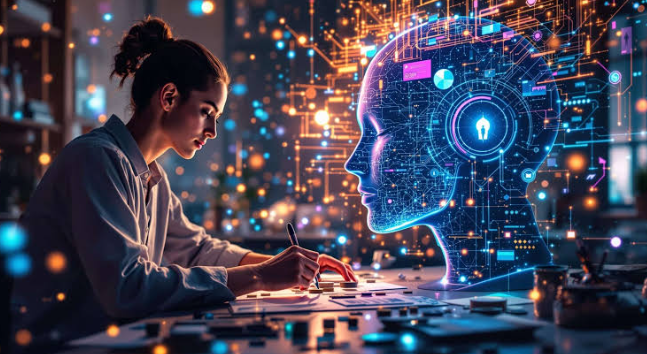
Artificial Intelligence in Creative Automation reframes how outputs are produced, modified, and orchestrated with minimal human input. Models, optimization, and perceptual heuristics guide iterative prototyping across design, sound, and narrative domains. The approach emphasizes provenance, governance, and interoperability as much as capability. Humans retain intent for accountability, ethical boundaries, and collaboration. The balance between autonomous generation and transparent authorship raises questions that demand careful scrutiny as tools evolve, inviting a careful examination of what comes next.
Artificial intelligence–driven creative automation encompasses systems that generate, modify, or orchestrate creative outputs with minimal human input, underpinned by probabilistic models, optimization frameworks, and perceptual heuristics.
The framework clarifies boundaries: AI bias and copyright ownership raise governance questions, independent creativity persists alongside automation transparency, and human-initiated intent remains essential for accountability, ensuring rigorous, interdisciplinary exploration without undermining freedom or originality.
See also: termanchor
AI-driven design, sound design, and storytelling workflows operate at the intersection of optimization, perception, and collaboration, reconfiguring traditional pipelines by offering rapid prototyping, data-informed experimentation, and adaptive feedback loops.
This fusion expands creativity metrics by quantifying intuitive choices, while enabling human AI collaboration that augments judgment, accelerates iteration, and sustains a principled, exploratory ethos across multidisciplinary teams.
In selecting tools, teams weigh platform ecosystems, model capabilities, and deployment realities against project goals, performance benchmarks, and resource constraints. The choice hinges on AI tool onboarding speed, model licensing tradeoffs, and how data governance shapes reuse and provenance. Balancing customization vs standardization with interoperability across platform ecosystems fosters disciplined experimentation, scalable deployment, and resilient, freedom-minded creative automation.
What governance frameworks, copyright paradigms, and collaborative protocols are required to navigate the ethical and legal terrain of AI-backed creative processes?
The discourse articulates ethical frameworks, ownership rights, and copyright concerns while detailing boundary pushing collaboration and collaboration models.
It emphasizes bias mitigation, transparent provenance, and accountable authorship, enabling innovators to balance freedom with responsibility in interdisciplinary, boundary-challenging creative automation.
AI tools reshape job roles by shifting emphasis toward oversight, interpretation, and creative orchestration; the AI workforce augments specialists while collaboration dynamics diversify tasks, enabling cross-disciplinary experimentation and independence within structured, measurable workflows.
A 60% faster idea-to-proof cycle is cited, highlighting speed as a driver of value. The approach emphasizes fast prototyping and rapid ideation, blending disciplines; it requires disciplined experimentation, lightweight tooling, and cross-functional collaboration to sustain creative momentum.
AI cannot fully replace human input; ethics, tool fatigue, creativity limits, and bias mitigation shape outcomes, guiding collaborations where intelligence amplifies imagination while preserving agency and freedom in interdisciplinary, rigorous, innovative creative workflows.
Copyright ownership centers on human authorship criteria; AI-generated work complicates claims, typically resulting in user or developer attribution or public domain status, varying by jurisdiction. The question remains: ownership hinges on originality, intervention, and legal definitions.
Hidden costs include ongoing subscription fees, computing power, and data governance burdens, while data leakage risks threaten confidentiality and provenance; creatives should weigh ethics, legality, and interdisciplinary safeguards to preserve autonomy and sustain innovative freedom.
In sum, AI-driven creative automation expands the frontier of design, sound, and storytelling by propelling rapid prototyping, data-informed experimentation, and adaptive feedback loops. Critics may worry about eroding authorship; however, transparent provenance, governance frameworks, and interoperable tool ecosystems preserve accountability while amplifying human intent. The result is a rigorous, interdisciplinary workflow where machines handle routine exploration and humans curate meaning, ensuring responsible innovation that respects ethical boundaries and enriches collaborative creativity.